

Few phrases in dentistry cause quite as much unnecessary anxiety as the words: “You need a root canal.” For decades, pop culture and old wives’ tales have painted this standard procedure as the ultimate dental villain, painful, intimidating, and to be avoided at all costs.
In reality, modern dentistry has completely transformed this procedure. Today, a root canal is not something that causes pain; rather, it is the ultimate relief from pain. It is a routine, highly efficient procedure designed to save a severely damaged or infected tooth, spare you from agonizing toothaches, and protect your overall oral health.
If you have been waking up with a dull, throbbing ache, or wincing every time you sip your morning coffee, you might be wondering what is happening beneath the surface. How do you know when a simple cavity crosses the line into a deeper infection?
Let’s take a close look at the anatomy of your tooth, the top five warning signs that an infection has reached your dental pulp, and why you should never delay getting the care you need.
Understanding Your Tooth: What is the Pulp?
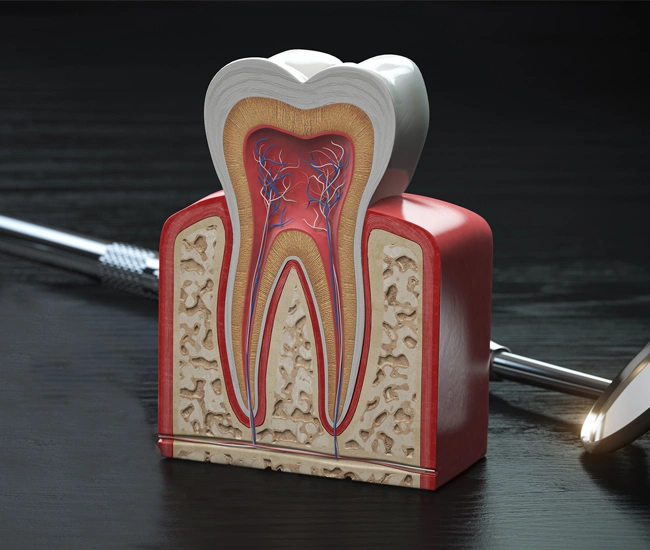
To understand why a root canal is necessary, it helps to know a little bit about how your teeth are put together. On the outside, your teeth are protected by tough, white enamel. Beneath that lies a hard layer called dentin. But right at the center of the tooth, hidden safely beneath these protective layers, is a soft bundle of tissue known as the pulp.
The dental pulp contains blood vessels, nerves, and connective tissue. It plays a critical role when your teeth are growing during childhood. Once a tooth is fully mature, it can survive without the pulp because the surrounding tissues continue to nourish it.
However, when deep tooth decay, repeated dental procedures on the same tooth, a cracked filling, or physical trauma allows bacteria to breach the enamel and dentin, things change quickly. Bacteria invade the pulp chamber, causing a severe infection and inflammation. Because the pulp is trapped inside a hard shell of tissue, it cannot expand. This creates intense internal pressure, triggering severe pain and setting the stage for a localized abscess if left untreated.
When this happens, a simple filling won’t cut it. You need targeted intervention to remove the infected tissue, clean the canals, and seal the tooth. This is precisely what root canal treatment is designed to do.
5 Clear Signs Your Tooth Infection Has Reached the Pulp
Your body is remarkably good at sending signals when something is wrong. When bacteria infiltrate the inner chambers of your tooth, your nervous system responds loudly. If you notice any of the following five signs, it is time to look into root canal therapy.
1. Persistent, Unrelenting Tooth Pain
The most common indicator of a deep pulp infection is pain that simply won’t go away. This discomfort can manifest in several ways:
- A deep, throbbing ache that seems to radiate through your jaw, ear, or head.
- Pain that wakes you up in the middle of the night.
- A constant dull ache that worsens when you lie down (due to increased blood pressure to the head).
While minor tooth sensitivity can come and go, deep pulpitis—inflammation of the pulp—rarely resolves on its own. If a persistent ache has settled into your jaw, your tooth is waving a red flag.
2. Lingering Sensitivity to Hot and Cold
Have you ever bitten into a slice of hot pizza or enjoyed a cold glass of iced tea, only to experience a sharp, wince-inducing jolt that lingered for minutes after the food or drink was gone?
Brief sensitivity to cold usually points to exposed dentin or mild enamel wear. However, when the sensitivity lingers for a long time after the hot or cold stimulus has vanished, it often means the nerves inside the pulp have been compromised and inflamed by bacteria.
3. Discoloration or Darkening of the Tooth
A dead or dying tooth tells its story through color. When the nerve and blood vessels inside the pulp chamber die due to severe infection or trauma, the internal tissue breaks down. This causes the tooth to undergo a chemical change, often turning a dull gray, dark yellow, brown, or even black compared to the neighboring teeth.
While a discolored tooth doesn’t always hurt initially (especially if the nerve has completely died), it is a clear structural warning sign that inner decay or cellular death has occurred and requires professional evaluation.
4. Swollen, Tender Gums Near the Affected Tooth
When a tooth infection spreads past the root tip and into the surrounding jawbone, it often creates a pocket of pus known as an abscess. This can cause the gum tissue right next to the problem tooth to become visibly swollen, puffy, and tender to the touch.
Sometimes, you might even notice a small, pimple-like bump, called a fistula or gum boil, forming on the gum tissue. This bump is actually a drainage path for pus released from the infection. If you notice a gum bump or recurring swelling, it demands immediate attention.
5. Pain When Chewing or Applying Pressure
Is it becoming difficult to chew your food on one side of your mouth? If biting down causes a sharp, sudden spike of pain, or if the tooth feels tender and loose when pressure is applied, the inflammation has likely reached the ligament surrounding the root tip.
When you chew, you are compressing the inflamed nerve endings and irritated tissues at the base of the root, resulting in that distinct, wince-worthy bite pain.
What Happens During Root Canal Therapy?
If you are experiencing any of these symptoms, the thought of the procedure itself can feel daunting. Fortunately, modern dental technology and advanced local anesthetics make the experience smooth, comfortable, and virtually pain-free.
Here is what you can expect during the procedure:
- Diagnosis and Numbing: Your care team will thoroughly examine the tooth, take digital X-rays, and administer a powerful local anesthetic to completely numb the area. You won’t feel any pain during the treatment.
- Accessing the Pulp: A tiny, precise opening is created in the crown of the tooth to allow access to the infected pulp chamber and root canals.
- Cleaning and Shaping: Specialized instruments are used to carefully remove the diseased pulp, bacteria, and debris from the canals. The interior is then thoroughly sanitized and shaped to receive a filling material.
- Sealing the Tooth: The empty canals are filled with a biocompatible, rubber-like material called gutta-percha to prevent future bacterial reinfection.
- Restoration (The Crown): Because a treated tooth lacks its internal nerve and blood supply, it can become brittle over time. To restore its strength, appearance, and full chewing function, your dentist will typically place a custom-molded dental crown over the tooth.
Don’t Wait for the Pain to Worsen
Tooth infections never heal on their own. Ignoring the early warning signs of pulp damage only allows bacteria to multiply, spreading deeper into the jawbone and potentially resulting in tooth loss or a painful systemic infection.
If you are experiencing any of the symptoms outlined above, the best step you can take is to visit our dental office for a comprehensive examination. Early detection saves teeth, saves money, and saves you from unnecessary discomfort.
Schedule Your Consultation with Gold Coast Family Dental Today
If you are dealing with persistent tooth pain, lingering sensitivity, or gum swelling, you don’t have to suffer through it. The experienced, compassionate team at Gold Coast Family Dental of Port Washington is here to help you get out of pain and restore your healthy smile.
Equipped with a state-of-the-art facility and a warm, welcoming atmosphere, our practice is dedicated to providing top-tier, stress-free dental care tailored to your unique needs.
Don’t let a tooth infection compromise your daily comfort or your health. Book an appointment with us today by calling (516) 883-4477 or visiting our office at 2 Cow Neck Rd, Port Washington, NY 11050, and let us help you smile with confidence again!
Frequently Asked Questions
1. Is a root canal painful?
This is the number one myth in dentistry! Thanks to modern local anesthetics, advanced techniques, and sophisticated dental technology, getting a root canal is no more uncomfortable than getting a routine cavity filling. The procedure actually relieves the severe pain caused by the infected pulp.
2. Can I just pull the tooth instead?
While tooth extraction is an option, preserving your natural teeth is almost always the best choice for your oral health. Extracting a tooth requires replacing it with a dental implant or bridge to prevent surrounding teeth from shifting. A successful root canal lets you keep your natural tooth structure intact for years to come.
3. How long does a root canal procedure take?
Most standard root canals can be completed in just one or two comfortable visits, typically taking between 60 to 90 minutes depending on the complexity of the tooth’s root anatomy.
4. How do I care for my tooth after a root canal?
Once your treatment is complete and your permanent crown is placed, you simply treat the tooth like any other natural tooth. Maintain a solid oral hygiene routine by brushing twice a day, flossing daily, and attending your regular cleanings and checkups.