

Maintaining a healthy smile during orthodontic care takes a little extra effort, but it’s absolutely worth it. If you have dental braces, flossing becomes more important than ever because food particles and plaque can easily get trapped around brackets and wires. Without proper cleaning, this buildup can lead to cavities, gum inflammation, and staining once your braces come off.
In this guide, we’ll walk you through exactly how to floss with braces, explore the best methods, and share expert tips to make your routine easier. If you ever need personalized guidance, don’t hesitate to visit our dental office for professional support.
Why Flossing With Braces Matters
Brushing alone can’t reach the tight spaces between your teeth or under the archwire of your braces. Flossing removes plaque and debris from these hard-to-reach areas, helping prevent gum disease and tooth decay.
During braces treatment, your teeth are gradually shifting. Keeping your gums healthy ensures your treatment stays on track and your final results look their best.
Best Methods for Flossing With Braces
Flossing with braces may seem tricky at first, but with the right tools and techniques, it becomes part of your daily routine. Let’s explore the most effective options.
1. Traditional Floss (With a Technique Adjustment)
Traditional floss still works, but it requires a bit more patience.
How to do it:
- Cut about 18–24 inches of waxed floss
- Carefully thread the floss under the wire
- Slide it between two teeth and form a “C” shape around each tooth
- Move the floss up and down gently
Waxed floss is recommended because it’s less likely to snag on brackets.
Best for: Patients who prefer a simple, cost-effective method
2. Floss Threaders (Beginner-Friendly Option)
A floss threader is a small plastic tool that helps guide floss under the wire, making the process much easier.
How to use it:
- Insert floss into the threader
- Slide the threader under the archwire
- Pull the floss through and floss normally
Floss threaders significantly reduce frustration and make daily flossing more manageable.
Best for: Beginners or anyone struggling with traditional flossing
3. Orthodontic or Super Floss
Specialty floss products are designed specifically for braces.
They often include:
- A stiff end (for threading)
- A spongy section (for cleaning around brackets)
- Regular floss for tight spaces
These all-in-one tools simplify the process and save time.
Best for: Convenience and efficiency
4. Water Flosser (Fast & Effective)
A water flosser (oral irrigator) uses a pressurized stream of water to clean between teeth and along the gumline.
How to use it:
- Fill the reservoir with water
- Aim the nozzle at your gumline
- Move along each tooth and bracket
Water flossers can clean around braces in just a few minutes and are especially helpful for removing food debris.
However, dentists recommend using them alongside traditional floss, not as a complete replacement.
Best for: Speed, comfort, and hard-to-reach areas
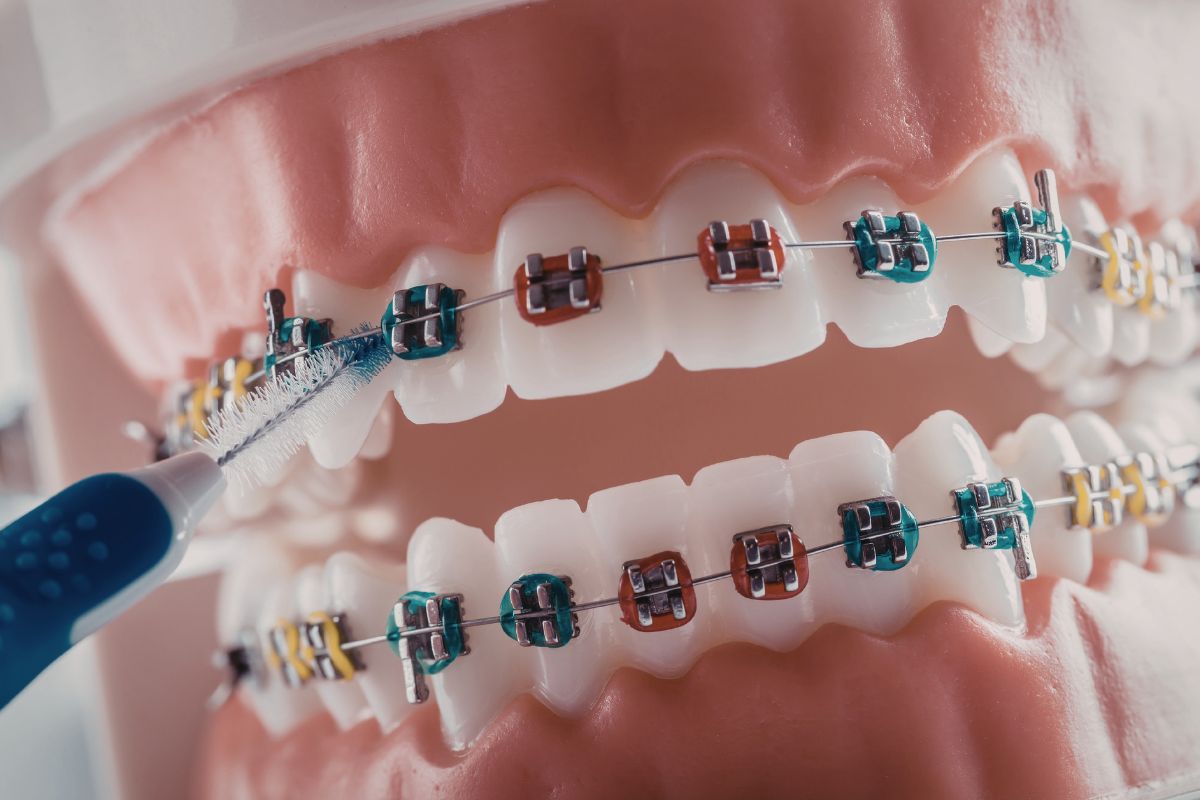
5. Interdental Brushes (Bonus Tool)
While not a replacement for floss, these small brushes are excellent for cleaning:
- Around brackets
- Under wires
- Between wider gaps
They’re perfect for quick cleanups after meals.
Step-by-Step Routine for Flossing With Braces
To get the best results from your braces treatment, follow this simple routine:
- Start by rinsing your mouth to loosen debris
- Use a floss threader or orthodontic floss
- Floss between each tooth carefully
- Clean around brackets and under wires
- Finish with a water flosser (optional but helpful)
Consistency is key—floss at least once a day to maintain optimal oral health.
Expert Tips to Make Flossing Easier
Flossing with braces doesn’t have to feel overwhelming. These tips can help:
- Use waxed floss to prevent tearing
- Take your time—quality matters more than speed
- Floss at night when you have fewer time constraints
- Use a mirror to guide your technique
- Combine tools (threader + water flosser) for better results
- Start with the hardest areas first, so you don’t skip them
With practice, flossing will become quicker and more natural.
Common Mistakes to Avoid
Many patients unknowingly damage their oral health during orthodontic care. Avoid these common mistakes:
- Skipping flossing because it feels difficult
- Snapping floss into your gums
- Only flossing occasionally
- Relying solely on a water flosser
- Ignoring bleeding gums (a sign you need better cleaning)
Remember, healthy gums are essential for a successful orthodontic outcome.
How Long Does It Take to Floss With Braces?
At first, flossing may take 10–15 minutes, especially with traditional methods.
The good news? As you get used to the process, it becomes faster and easier. Many patients find their routine becomes second nature within a few weeks.
Maintaining Oral Health During Orthodontic Care
Flossing is just one part of a complete oral care routine. To protect your smile:
- Brush at least twice daily with fluoride toothpaste
- Avoid sticky or hard foods that can damage braces
- Schedule regular dental cleanings
- Follow your orthodontist’s instructions
Regular checkups ensure your teeth stay healthy while your braces work their magic.
When to Visit Your Dentist
If you notice:
- Persistent gum bleeding
- Swelling or pain
- Difficulty flossing certain areas
It’s time to visit our dental office for professional guidance. Early intervention can prevent more serious issues and keep your treatment on track.
Keep Your Smile Healthy During Braces Treatment
Flossing with braces may take a little extra effort, but it plays a critical role in protecting your teeth and gums. With the right tools and consistent habits, you can maintain excellent oral health and enjoy a beautiful, confident smile when your braces come off.
If you need guidance or a professional cleaning, the team at Gold Coast Family Dental of Port Washington is here to help. We’re committed to supporting your smile every step of the way.
Ready to take the next step? Book an appointment today and let us help you achieve a healthier, brighter smile!
FAQ
1. How often should I floss with braces?
You should floss at least once a day, preferably at night, to remove plaque and food particles.
2. Is a water flosser enough for braces?
No, it’s best used as a supplement. Traditional floss is still necessary for cleaning tight spaces between teeth.
3. What type of floss is best for braces?
Waxed floss, orthodontic floss, or super floss are ideal because they don’t snag on brackets.
4. Why do my gums bleed when I floss?
Bleeding is often a sign of inflammation caused by plaque buildup. Regular flossing usually improves this over time.
5. Can I use floss picks with braces?
Some orthodontic floss picks are designed for braces, but they may not be as effective as threaders or traditional floss.
6. How can I make flossing faster?
Using tools like floss threaders or water flossers can significantly reduce the time needed.